Below we’ve compiled a list of our most commonly asked questions. If your question is not answered below, please contact our customer support team.
Jump to a Section
General | Cleaning & Care | Wearing the Brace | Comfort Issues | Ankle Injuries| Help Videos
Ankle Brace Specific Questions
Ultra 360 Lace-Up | Ultra Zoom | Ultra High-5 | Ultra CTS
General
-
How do I know which ankle brace is best for me?
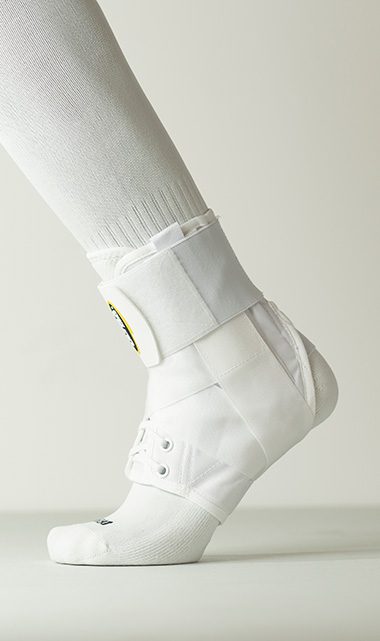
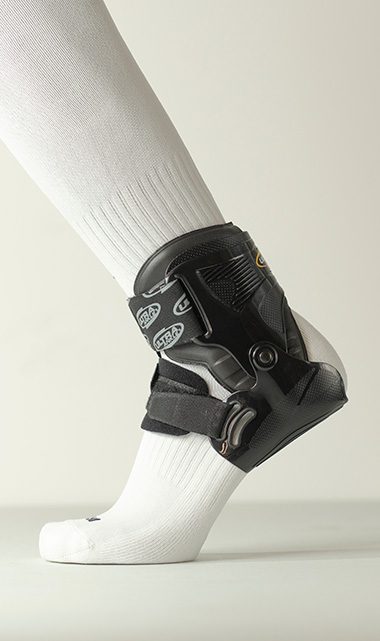
Almost everyone will use our Ultra 360 Lace Up ankle brace or our Ultra Zoom hinged ankle brace. The Ultra High-5 and Ultra CTS are specialty focused products. If you are unsure whether you should be in the Ultra 360 or Ultra Zoom, you can send one of our certified athletic trainers a message and they would be happy to give you a specific product recommendation.
-
Are the brace sold in pairs?
No, all our Ultra Ankle braces are sold in single units, not pairs.
-
Will wearing an ankle brace weaken my ankle?
No. There is no scientific evidence ankle braces, even lace ups, weaken ankles. Ankles have to be immobilized in the "neutral position" for weeks at a time, like in a walking boot, to begin to lose strength and become atrophied. Hinged ankle braces like the Ultra Zoom actually keep the ankle joint strong because they allow full up and down natural range of motion necessary to enhance performance and keep the muscles and tendons around the joint strong.
-
My brace is squeaking – what can I do to stop it?
This is not uncommon as the hinge on the Ultra Zoom can dry out from time to time. Simply use WD-40 Silicon Spray and apply to each rivet on either side of the brace, then wipe clean with a rag. This will take care of the squeaking.
-
Should I still have my ankles taped even when wearing my brace?
Generally, no. Because you now have the support of an ankle brace you do not need the taping. If you wear our Ultra 360 Lace Up ankle brace and would still like to tape underneath it, that is up to you. However, the tape will provide little added support and will restrict range of motion even further.
We do not recommend taping underneath our Ultra Zoom ankle brace. It has been found the tape between the padding, the sock, and the ankle joint can cause friction which can cause abrasions.
-
Aren’t you only supposed to wear an ankle brace after an injury?
Yes and no. Athletes that play sports with a high incidence of ankle injuries—like volleyball and basketball—should wear preventative ankle bracing since there are many situations during a game where ankle injuries cannot be prevented regardless of ankle strength or athletic ability. With these sports it’s not “if” the injury will occur but “when” it will occur (think coming down on another player’s foot after jumping for a block or rebound). However, in other sports with less ankle injuries, it’s not necessary to wear preventative ankle bracing.
-
Are the braces Medicare approved? Is there a HCPS billing code?
Yes. HCPS billing codes for the braces are:
- Ultra Zoom – L1902
- Ultra High-5 – 1906
- Ultra CTS – L1971
-
Should ankle braces be worn while sleeping?
No, unless your medical professional recommends you do so.
-
Is it okay to only wear one ankle brace? Will this hurt the unbraced ankle due to compensation?
Many collegiate and professional athletes wear just one ankle brace all season long without any issues. Although some athletes prefer to wear two braces because they say it feels better.
-
If I wear these ankle braces all season will I start to rely on them?
No, this is a myth. The right ankle brace should have no residual effect on your ankle strength, performance or proprioception.
-
What is ankle unloading?
Ankle unloading is important to individuals that have weight bearing pain from a recent injury or people with osteoarthritis. Ankle unloading is the ability of the ankle brace to absorb painful ankle impact from standing or walking that causes weight bearing pain. Our Ultra CTS ankle brace is designed to unload the ankle and reduce weight bearing pain.
-
Can wearing an ankle brace cause a knee injury?
No clinical studies support the claim that wearing an ankle brace will cause a knee injury. One expert said that in order to transfer enough torque from the ankle to the knee to cause an injury you would need to wear something like a ski boot, which offers virtually zero ankle mobility.
Back to Top
Cleaning & Care
-
My brace is squeaking. How do I stop it?
This is an easy fix. Yes, sometimes the brace will squeak because of the advanced resin used in the Performathane® shell. Any type of spray lubricant such as silicone or similar sprayed directly in the rivet/hinge area where the upper and lower components meet will stop the squeaking. You can purchase silicone spray lubricant at any hardware store. We typically use WD-40 Silicone Spray, but any silicone spray will do.
-
How do I wash my brace?
You can hand wash the brace, pads and straps with a damp cloth and let air dry. You can detach the foam pad from the brace in order to clean the shell and pad thoroughly. Do not use a washing machine or dryer to clean the brace. Replacement straps and pads for our braces are available for purchase if needed.
-
How do I know when to replace my brace?
If your brace is over a year old, one way to test if it needs replaced is to evaluate the hinge area to see if it has become loose.
To test the hinge, place one hand on the top of the brace and the other hand on the bottom of the brace and push and pull the brace back and forth. If you can see a lot of extra movement in the hinge area, then replacing the brace is recommended to regain stability.
Back to Top
Wearing the Brace
-
Are the ankle braces ankle specific? Do they come in LEFT and RIGHT?
Ultra Ankle braces will fit either ankle when they are new, however once you start wearing them and they start forming to your ankle they become ankle specific and should continue to be worn on the same ankle.
It is very important that mark the braces L or R (left or right) and always wear them on the same ankle. Where the top strap attaches to the brace there is a white colored tab where you can mark the brace L or R.
If you're an athlete, we recommend you write your name and/or number as well to identify them if they are lost amongst your teammates.
-
What type of shoe should I wear with the ankle brace?
Sneakers are best to wear with ankle braces, but more specifically sneakers with a traditional tongue and laces. You want to be able to loosen the laces enough to insert the brace in the shoe. Sometimes this means loosening the laces all the way to the bottom of the tongue. At first it might seem like the brace is too big for the shoe but once the brace is broken in it becomes much lower profile and form-fitting.
-
What type of shoe should I NOT wear with the ankle brace?
Some of the newer athletic shoes are designed with what is called a single upper – meaning it fits like a sleeve over the foot and ankle. Because of the nature of the design, the shoe is very difficult to insert an ankle brace in. Also, these shoes offer less stability because of the flexible fabric used to make the shoe.
-
The brace won’t fit in my shoe. What do I do?
If the brace won't fit in your shoe, it's usually because of one of the following reasons:
- Do you have the correct size ankle brace for your ankle? We recommend not using your shoe size to determine brace size and instead measuring your ankle circumference per the size chart on the product page.
- If you measured your ankle circumference and you have the correct size ankle brace, then the issue may be the type of shoe you are using. Sneakers are best to wear with ankle braces, but more specifically sneakers with a traditional tongue and laces.
- The first couple of times you wear the brace, you may have to loosen the laces all of the way down to the bottom of the tongue and then relace them over the brace.
At first it might seem like the brace is too big for the shoe but once the brace is broken in it becomes much lower profile and form-fitting.
-
Do these fit in a high-top basketball shoe?
Yes, in most cases our ankle braces will fit in high-top basketball shoes. However, the Ultra High-5 and Ultra CTS are a little easier to fit than the Ultra Zoom.
Ultra Zoom
- If your basketball shoe had a traditional tongue and laces, then loosen the laces enough so that you can insert your foot in the shoe.
- At first it might seem like the brace is too big for the shoe, but once the brace is broken-in it becomes much lower profile and form-fitting and will fit in the shoe much easier.
- Some of the newer basketball shoes are designed with what is called a single upper, meaning it fits like a sleeve over the foot and ankle. This type of basketball shoe is much more difficult to wear with an ankle brace because you cannot expand the opening enough to insert your foot with the brace applied.
- If this is the case, then remove the lower mid-foot strap from the brace (it will not be used). Lift the shoe’s insole and place the bottom of the brace beneath it. Now insert your foot in the shoe and secure the laces and the top strap of the brace.
- If your basketball shoe had a traditional tongue and laces, then loosen the laces enough so that you can insert your foot in the shoe.
-
How do I fit the brace in a soccer shoe?
If you need to fit your Ultra Zoom ankle brace in your soccer cleats, follow these instructions:
If your soccer shoe had a traditional tongue and laces:
- Loosen the laces enough so that you can insert your foot in the shoe.
- At first it might seem like the brace is too big for the shoe, but once the brace is broken-in it becomes much lower profile and form-fitting and will fit in the shoe much easier.
Some of the newer soccer shoes are designed with what is called a single upper, meaning it fits like a sleeve over the foot and ankle. This type of soccer shoe is much more difficult to wear with an ankle brace because you cannot expand the opening enough to insert your foot with the brace applied. If this is the case, then you can use an alternative fitting method.
- First remove the lower mid-foot strap from the brace (it will not be used).
- Lift the shoe’s insole and place the bottom of the brace beneath it.
- Insert your foot in the shoe and secure the laces and the top strap of the brace.
- Loosen the laces enough so that you can insert your foot in the shoe.
Back to Top
comfort issues
-
I wore my brace for the first time and its uncomfortable. Is there anything I can do?
Ultra Ankle braces require a break-in period for the shell of the brace to form-fit to your ankle. Typically, this takes 2-3 practices for athletes or wearing for 4-6 hours for non-athletes. Once the brace has an opportunity to adjust to the shape of your ankle it will be very comfortable to wear and fit in the shoe much easier. Here are additional fitting tips to ensure a comfortable fit.
- Wearing 2 braces? If you are wearing braces on both ankles, make sure you mark them L or R (left or right) on the white colored tab where the top strap attaches to the brace. Always wear the same brace on the same ankle so they will form faster and feed better.
- For the first few practices some athletes wear two pairs of socks for additional cushioning between the ankle and the brace.
- Did you purchase the correct size brace? Measure your ankle circumference per the size chart on the product page. Do not use shoe size to determine brace size.
After the break-in period if the brace is still uncomfortable the best thing to do is send one of our certified athletic trainers a message and they would be happy to help.
-
I got a blister from wearing the ankle brace. What can I do to stop this?
Blisters occur from friction. Friction is an indication that the brace is not aligning properly with the ankle or the brace is new and just needs to be broken in. To reduce the friction between the brace and the ankle during the break-in period, try wearing two pairs of long athletic socks under the brace. If after the recommended break-in period the brace is still causing a blister, check to make sure you purchased the correct size brace and that you did not use shoe size to determine brace size.
-
My aging brace is starting to be uncomfortable, what do I do?
Older braces will start to become uncomfortable because the cushioning properties of the padding system as well as the straps are worn out from normal wear and tear. Replacement straps and pads are available for purchase as needed.
If your brace has been used for over two years it may need replacing. In most cases as the brace ages the hinge area will begin to loosen and reduce the overall amount of support provided by the brace.
To test the hinge in your brace, place one hand on the top of the brace and the other hand on the bottom of the brace and push and pull the brace back and forth. If it seems like there is a lot of movement in the hinge area, then replacing the brace is recommended to regain stability.
-
The strap is pinching the front of my leg. What do I do?
This may only occur during the first few times you wear the brace when the edge of the strap is new and stiff. To eliminate this pinching roll the top of your sock down so there are two layers of socks between the bottom edge of the strap and your leg. After wearing a few times the edge of the strap will become flexible and eliminating the pinching.
-
What kind of socks should I wear?
With all of our braces, it is recommend that you wear athletic socks long enough to rise above the top of the ankle brace.
Back to Top
Ankle Injuries
-
What are the different level of ankle sprains?
Ankle sprains are measured in grades. A Grade 1 ankle sprain occurs when the ankle ligament is slightly stretched. With a Grade 2 ankle sprain your ligament is partially torn, and with a Grade 3 ankle sprain your ligament is completely torn. Once you stretch your ankle ligament it will continue to get more and more stretched out with each additional ankle injury, thus increasing the risk of reinjury.
-
Will these ankle braces help with bone on bone issues?
Yes, our Ultra CTS ankle brace is not only effective for ankle injuries but osteoarthritis as well.
Back to Top
Ultra 360 Lace-Up
-
How do I wash my Ultra 360 Lace-Up?
Your Ultra 360 Lace-Up can should be hand washed with mild soap or detergent and air dried.
-
Can I wear the Ultra 360 Lace-Up on either ankle?
Yes, your Ultra 360 Lace-Up can be worn on either ankle. Even if you’ve previously worn on the other ankle. This brace is meant to be adjustable to your comfort and support needs.
-
Is the Ultra 360 Lace-Up better than taping my ankle(s)?
Using the Ultra 360 Lace-Up is akin to having a re-usable tape job. Both provide similar support but with the Ultra 360 Lace-Up you are not spending time and money each time you are looking to help prevent an ankle injury like you would with taping.
Back to Top
Ultra Zoom
-
What do I do if the Ultra Zoom won't fit into my shoe?
The Ultra Zoom will fit into your shoe, you will just need to reset your shoelaces. This means significantly loosen the shoelaces down to the toes. This will allow for your foot and the brace to easily fit into your shoe. Then, re-tighten the shoelaces starting at the toes to account for the ankle brace. This will be the only time you will need to reset your shoelaces. Watch our Recommended Shoes Video to learn more.
-
Why is the Ultra Zoom uncomfortable?
The Ultra Zoom is initially uncomfortable because it's new. Like a new pair of shoes, it needs to be worn to be broken in. Wear the brace for 15 - 20 minutes IN YOUR SHOES to begin the break-in-period. The quickest method to achieving maximum comfort is to watch our Custom Form Fitting Video. Don't forget, Ultra Ankle has a 60 day "Wear the Brace" return policy. Returns in USED CONDITION still receive a FULL PRODUCT REFUND.
-
Why doesn't the Ultra Zoom seem to fit or fully support my ankle and/or is loose when I first put it on?
The Ultra Zoom brace MUST BE WORN WITH SHOES for maximum support, stability, and fit. This brace is not recommended for sleeve-style shoes, tall boots, or sandals.
-
How do I know when to replace my Ultra Zoom brace?
The shell of the Ultra Zoom will never crack, break or tear but after 2-3 years of wear and tear the hinge may become too loose to provide adequate support. To test the hinge, place one hand on the top of the brace and the other hand on the bottom of the brace and push and pull the brace back and forth. If you can see a lot of extra movement in the hinge area, then replacing the brace is recommended to regain stability.
-
The Ultra Zoom is an Orthopedic ankle brace. What does this mean?
This means the Ultra Zoom is a more advanced design producing a higher level of ankle support. It is designed to move like an ankle joint with a hinge for natural range of motion. Orthopedic braces traditionally have a longer break-in-period, but using external heat helps. Watch our Custom Form Fitting Video for more information.
-
Can I use the Ultra Zoom on either ankle (right or left)?
Yes. However, once you've begun form-fitting the brace to either your right or left ankle, you will need to label it "right" or "left" as it will be custom fit to that side. Watch our Ultra Zoom Fitting Video for more information.
-
Can I wear my orthotics with the Ultra Zoom?
If the orthotic is soft we recommend wearing the Ultra Zoom as described in the fitting instructions.
- Apply the brace to the ankle first, then insert in the shoe. The bottom of the Ultra Zoom will form to the top of the orthotic.
- If the orthotic is rigid (usually prescribed by a physician) then you can place the bottom of the Ultra Zoom beneath the orthotic. Depending on the shoe, you may decide not to use the lower mid-foot strap with this fitting method.
-
Do I need to wear socks with the Ultra Zoom?
Yes. You need to wear socks with any hinged ankle brace.
Back to Top
Ultra High-5
-
Who should wear the Ultra High-5?
- Adults with chronic ankle instability - those who've rolled or sprained their ankle 5 or more times.
- Workers on their feet all day - construction, warehouse, delivery, or tradespeople wearing low-top boots who need added ankle stability.
- Hikers & outdoor adventurers - fits comfortably inside low-top hiking boots and provides stability on uneven terrain.
- Active aging adults - older adults who want steady, confident steps in daily lif.
- Anyone wanting year-after-year reliability - a stronger alternative to fabric sleeves or lace-ups.
-
Does the bottom of the brace go above or below the insole of my shoe?
The Ultra High-5 is designed to be placed under the insole of your shoe for added stability and comfort. For more information watch our Ultra High-5 Fitting Video.
-
How do I know when to replace my Ultra High-5 brace?
If your brace is over a year old, one way to test if it needs replaced is to evaluate the hinge area to see if it has become loose.
To test the hinge, place one hand on the top of the brace and the other hand on the bottom of the brace and push and pull the brace back and forth. If you can see a lot of extra movement in the hinge area, then replacing the brace is recommended to regain stability.
-
Can I wear my orthotics with the Ultra High-5?
Yes, many people wear orthotics with their Ultra High-5. Simply place the bottom of the brace beneath the orthotic. For additional information, watch our Ultra High-5 Fitting Video.
Back to Top
Ultra CTS
-
Can I use the Ultra CTS as a replacement for my walking boot?
The Ultra CTS is a great option for safely transitioning out of your walking boot and back into activity. Through our medical distributor, BREG, we sell our products through many doctor’s offices. For more information on how you can wear the Ultra CTS instead of a walking boot, check out this blog post or send one of our certified athletic trainers an email.
-
Can I wear my orthotics with the Ultra CTS?
If the orthotic is soft we recommend wearing the Ultra CTS as described in the fitting instructions.
- Apply the brace to the ankle first, then insert in the shoe. The bottom of the Ultra CTS will form to the top of the orthotic.
If the orthotic is rigid (usually prescribed by a physician) then you can place the bottom of the Ultra CTS beneath the orthotic. Depending on the shoe, you may decide not to use the lower mid-foot strap with this fitting method.
Back to Top
Help Videos
How to Replace the Upper Activity Strap
Back to Top
Question Not Answered?
Contact our customer support team – we’re here to help.