VOLLEYBALL ANKLE BRACES: SUPPORT & PROTECTED MOVEMENT
Ankle Support for the Demands of Volleyball
From blocking and hitting to setting and back-row defense, volleyball demands repeated jumping, landing, and quick changes of direction. An unexpected landing on another player’s foot can force the ankle to roll, even when you feel strong and prepared.
Choosing ankle support means considering both those demands and your individual needs. Previous injuries, current symptoms, footwear, and the support you want during play all help guide your choice.
Whether you are focused on prevention or returning after an injury, explore our guides to Ankle Sprains, High Ankle Sprains, and Ankle Injury Prevention.
Common Ankle Injuries and Ongoing Problems in Volleyball
Lateral Ankle Sprains
A lateral ankle sprain affects the ligaments on the outside of the ankle, often when the foot rolls inward during an awkward landing or change of direction. Learn more about ankle sprains.
High Ankle Sprains
A high ankle sprain affects the ligaments connecting the lower leg bones just above the ankle. It involves a different injury pattern and may require a different treatment and recovery plan. Visit our High Ankle Sprains guide.
Recurring Ankle Rolling or Giving Way
Repeated rolling or giving way can continue after a previous sprain and affect confidence during play. If this happens regularly, seek an evaluation rather than relying on a brace alone. Learn about treatment and support options on our Ankle Instability page.
Preventing Volleyball Ankle Injuries
Ankle injury prevention involves both preparing your body for volleyball and choosing appropriate support. Strength and balance training help build ankle control, while an ankle brace can help reduce sprain risk—especially if you have a previous ankle injury.
Make prevention part of your routine throughout the season. Continue your exercises and use appropriate support during practices and matches. If you are returning from an injury, follow your care team’s rehabilitation and return-to-play guidance.
Compression Sleeves vs. Ankle Braces for Volleyball
A basic compression sleeve provides compression but does not offer the same structural support as a lace-up or hinged ankle brace designed to help limit excessive rolling.
When choosing ankle support for volleyball, consider what you need it to do. Compression and support against ankle rolling serve different purposes, particularly during jumping, landing, and changes of direction.
An appropriate ankle brace can be part of your prevention plan alongside strength and balance training. No brace can prevent every injury.
CHOOSING AN ANKLE BRACE FOR VOLLEYBALL
Choosing an ankle brace for volleyball means considering your injury history, support needs, and how the brace fits inside your volleyball shoes. Whether you’re blocking, hitting, setting, or playing defense, the goal is support that works with the movements your position demands.
Ultra 360 Lace-Up Ankle Brace — For 2 or Fewer Previous Ankle Injuries
The Ultra 360® Lace-Up ankle brace provides moderate support for volleyball players with two or fewer previous ankle injuries.
Its lace-up design provides compression and uniform support, with adjustable Figure-8 straps that mimic athletic taping to help limit ankle rolling.
Key Benefits:
- Figure-8 Straps: Provide adjustable support for lateral movement, jumping, and landing.
- Adjustable Compression: Multiple adjustment points let you customize compression and fit.
- Designed by a Certified Athletic Trainer: Developed for athletes and active individuals.
- Fits Inside Volleyball Shoes: Designed to be worn inside athletic shoes for support during practices and matches.
Your injury history is a starting point. Your position, previous rehabilitation, footwear, and support needs also matter when choosing an ankle brace.
Ultra Zoom Hinged Ankle Brace — For 3 or More Previous Ankle Injuries
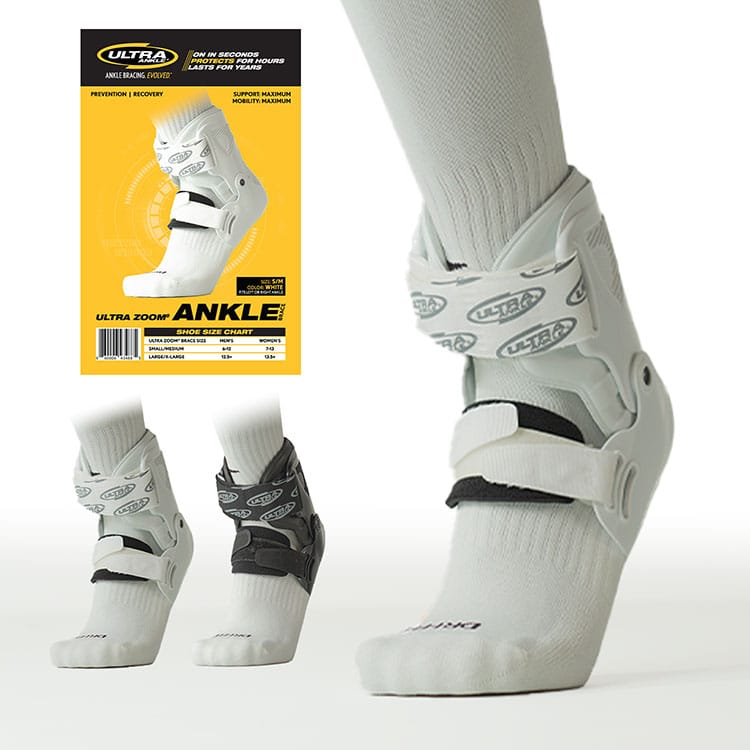
The Ultra Zoom® hinged ankle brace provides maximum support with Protected Movement for volleyball players with three or more previous ankle injuries.
Its hinged-cuff design allows natural up-and-down ankle motion while helping limit excessive rolling and turning. This is Protected Movement—support for the jumping, landing, and changes of direction that volleyball demands.
Key Benefits:
- Custom Form-Fitting Shell: Soft-shell construction gradually forms to your ankle for comfort and side-to-side stability.
- Protected Movement: Hinged design supports the ankle while allowing natural up-and-down motion.
- Secure Two-Strap System: Straps above and below the ankle reduce the need for frequent readjustment. Set it and forget it.
- Fits Inside Most Volleyball Shoes: Loosen your shoelaces before inserting your foot and brace, then retighten for a secure fit.
Whether you play at the net or in the back row, choose support based on your injury history and individual needs. Our Certified Athletic Trainers can help you understand your options.
Recovering From a Volleyball Ankle Injury
Returning to volleyball requires more than being able to walk comfortably. Your ankle needs to handle repeated jumps, landings, lateral movement, and quick changes of direction.
Rehabilitation helps restore ankle movement, strength, balance, and control. Your physical therapist or athletic trainer can guide your progression from basic exercises to volleyball-specific drills and assess your readiness for practices and competition.
An appropriate ankle brace provides additional support during your return to activity. Ultra Zoom offers Protected Movement, allowing natural up-and-down ankle motion while helping limit excessive rolling and turning. Bracing works alongside rehabilitation and does not replace clearance from your healthcare provider.
For more information, visit our Ankle Sprains or High Ankle Sprains page.
When Should a Volleyball Player Wear an Ankle Brace?
Consider ankle bracing if you:
Have a history of ankle sprains
Experience repeated ankle rolling or giving way
Want additional support during jumping, landing, or changes of direction
Are returning to volleyball after an injury and your care team recommends bracing
Your position is one consideration, but it should not determine your brace choice by itself. Injury history, current symptoms, footwear, and support needs all matter.
If your ankle repeatedly gives way or remains painful or swollen, seek an evaluation from a healthcare provider. Our Certified Athletic Trainers can help with questions about brace selection and fit.
FAQ: Volleyball Ankle Injuries & Bracing
Why are volleyball players at such high risk for ankle sprains?
Volleyball combines repeated jumping, landing, and quick changes of direction. An awkward landing—including landing on a teammate’s or opponent’s foot—can force the ankle to roll.
Previous ankle sprains and ongoing problems with ankle control also matter. Strength and balance training, rehabilitation after injury, and appropriate ankle support can be part of a prevention plan.
Does ankle bracing help prevent volleyball ankle injuries?
An appropriate ankle brace can help reduce the risk of ankle sprains, particularly for players with previous sprains. Lace-up and hinged braces provide structural support designed to help limit excessive ankle movement.
Use bracing alongside strength and balance training as part of your prevention routine. No brace can prevent every injury.
Which ankle brace is better for volleyball?
Ultra 360 provides moderate support for volleyball players with two or fewer previous ankle injuries. Ultra Zoom provides maximum support with Protected Movement for players with three or more previous ankle injuries.
Your injury history is a starting point. Your position, footwear, previous rehabilitation, and support needs also matter. Our Certified Athletic Trainers can help you understand your options.
Do ankle braces reduce my vertical jump?
The effect can vary with the brace, its fit, and the individual player. Ultra Zoom’s hinged design allows natural up-and-down ankle motion while providing side-to-side support. Ultra 360 uses a lace-up design for compression and uniform support.
Choose a brace that fits securely inside your volleyball shoes, and follow its fitting and break-in instructions. Get comfortable with it during practice before using it in competition.
Should I wear an ankle brace every practice?
If you use an ankle brace for volleyball, wear it consistently during the practices and matches it is intended for. Practice includes the same jumping, landing, and changes of direction that place demands on your ankle during competition.
Your athletic trainer or healthcare provider can help determine when bracing is appropriate, especially after an injury. Continue strength and balance training alongside brace use.
Can I return to play after an ankle sprain?
A return to volleyball is often possible, but timing depends on your injury and recovery. Your care team should assess whether your ankle is ready for jumping, landing, and changes of direction before you resume full competition.
An appropriate ankle brace can provide additional support during your return. Continue rehabilitation and follow your care team’s guidance as you progress through drills, practices, and matches.