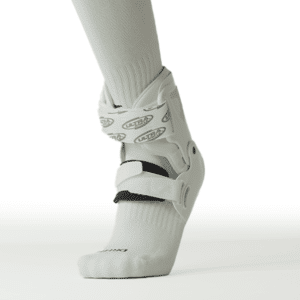
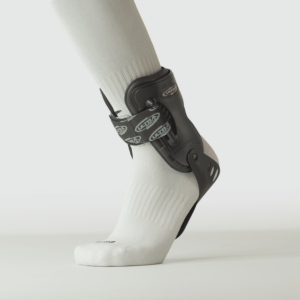
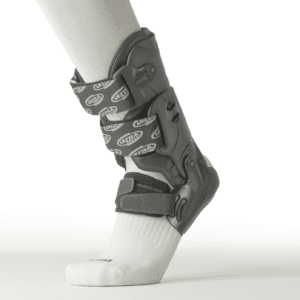
In the realm of product innovation, progress often reaches a standstill until new materials or manufacturing techniques break the mold. This is especially true for medical and sports equipment, like ankle braces. Ultra Ankle® has pushed boundaries with the creation of the Ultra Zoom® ankle brace, an example of how innovation can completely transform a product category. The technological advances behind this game-changing ankle brace didn’t exist until Ultra Ankle® developed, tested, and refined them to provide superior protection against ankle injuries, and superior capacity to aid in ankle injury recovery.

Unlike any other brace on the market, the Ultra Zoom® ankle brace features patented materials and a forward-thinking design, making it a leader in injury prevention. Let’s explore how this brace’s advanced technology, including the Performathane® flexible shell and PerformaFit® 3D padding, sets it apart.

The Ultra Zoom® Advantage: Technology Meets Design

The Ultra Zoom® ankle brace is a result of years of meticulous research and development aimed at creating a brace that delivers unparalleled comfort, protection, and durability. This revolutionary product includes three proprietary technologies you won’t find in other braces: the Performathane® soft shell, the PerformaFit® padding system, and a hinged-cuff design that ensures optimal support and range of motion.

How Does It Work?

For an ankle brace to perform effectively, it must closely mimic the anatomy of the joint it’s protecting. This requires a custom-fit design—one that adapts to the wearer’s unique anatomy, delivering maximum comfort and support. However, achieving this level of custom fit requires innovation in both materials and design, which Ultra Ankle® tackled head-on.

After a five-year research process, the company engineered the materials that would become the foundation of the Ultra Zoom® brace. These materials provide unmatched flexibility, durability, and adaptability, giving athletes and active individuals superior protection season after season.

The Technology Behind the Custom Fit: Performathane® and PerformaFit®

So, what makes Performathane® and PerformaFit® special?

  • Performathane® Flexible Soft Shell
    The external shell of the Ultra Zoom® brace is made from Performathane®, a patented material that reacts to the wearer’s body heat to create a custom fit. Within just a few practice sessions, the brace molds to the shape of your ankle for a snug, secure fit. If you’re in a hurry, you can use a regular hair dryer to speed up this process. The best part? Performathane® is incredibly durable, engineered to withstand cracks and tears, providing multi-season longevity that few braces can match.
  • PerformaFit® 3D Padding System
    The inside of the Ultra Zoom® brace is lined with the PerformaFit® padding system, another proprietary feature designed for ultimate comfort. This specially formulated foam adapts to the contours of your ankle, providing cushioning that retains its shape and protective properties over the course of an entire sports season. The result is a brace that not only feels great but performs at a high-level day in and day out.

Superior Ankle Injury Recovery and Prevention: Why the Ultra Zoom® Stands Out

By combining the adaptive Performathane® shell and the responsive PerformaFit® padding, the Ultra Zoom® ankle brace delivers an unparalleled level of injury recovery and prevention. The hinged-cuff design allows for natural ankle range of motion to enhance performance and keep the muscles strong. The Ultra Zoom helps to restrict excessive ankle turning (inversion) and twisting (rotation) that cause both low and high ankle injuries. Most other ankle braces are only designed to help restrict low ankle injuries.  To learn more about the Ultra Zoom product features, click here. Unlike traditional braces, which can feel stiff or bulky, the Ultra Zoom® forms a low-profile custom fit that is on your ankle in seconds, protects for hours and lasts for years. To learn more about fitting the Ultra Zoom ankle brace, click here.

The Future of Ankle Bracing

If you’re an athlete or someone prone to ankle injuries, the Ultra Zoom® ankle brace offers a level of comfort and security that traditional braces simply cannot match. Whether you’re playing basketball, volleyball, or just staying active, the Ultra Zoom® provides the support you need without sacrificing comfort or durability. With its cutting-edge materials and design, it represents the future of ankle protection and ankle injury recovery.

Interested in learning more about the Ultra Zoom® ankle brace? Our team of certified athletic trainers is here to help answer any questions you may have and guide you through selecting the right ankle brace for your needs. Reach out today to discover how Ultra Ankle® can support you in staying active, injury-free, and at the top of your game.
When to Transition from a Lace-Up to a Hinged Ankle Brace

Ankle injuries are one of the most common issues faced by athletes, and the right ankle brace can make all the difference in ankle injury prevention, performance, and when needed, recovery. Many athletes opt for lace-up ankle braces because they’ve been around forever, they’re affordable, easy to find, and fit well in most sports shoes. However, while lace-up braces offer some level of support, they also come with limitations that can negatively impact both your performance and long-term ankle health.

At Ultra Ankle, we aim to help athletes make informed decisions about their ankle support. In this blog, we’ll explore when it’s time to move on from a lace-up brace to a more supportive hinged ankle brace, especially if you have a history of multiple ankle injuries.

The Disadvantages of Lace-Up Ankle Braces

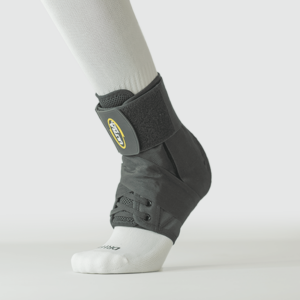
Lace-up ankle braces are commonly used by athletes, but they come with significant limitations. These braces work much like a reusable tape job: they offer short-term support by wrapping the ankle in the neutral position. They often include figure-8 straps to help restrict excessive ankle rolling. However, because they are made from fabric, once you start moving, the brace’s ability to provide stability decreases rapidly—often within the first 15 minutes of activity. This leaves your ankle vulnerable to injury or re-injury, especially if you’ve already suffered from multiple sprains.

For athletes who have experienced more than three ankle injuries within two years, a lace-up brace is simply not enough support. Repeated injuries can loosen the ligaments in your ankle, making them more susceptible to further damage. This creates what trainers call a “cycle of injury.” Breaking this cycle requires a brace that provides long-term support and stability—something that lace-up braces cannot offer.

The Impact of Lace-Up Braces on Performance

Several studies have demonstrated that lace-up ankle braces can hinder athletic performance. Below are key findings from scientific research that highlight how lace-up braces negatively affect various aspects of athleticism:

  • Kovaleski JE, University of South Alabama (2016): In a study of 12 collegiate male athletes, wearing a lace-up brace significantly reduced range of motion (ROM) in the ankle and decreased muscle torque, work, and power. In layman’s terms, lace-up braces restrict ankle movement and weaken muscle function, making it harder to perform at your peak.
  • Burks RT, American Journal of Sports Medicine (1991): This study found that lace-up braces reduced performance metrics, including a 4.6% decrease in vertical jump, a 3.6% decrease in shuttle run times, and a 3.2% reduction in sprint speed. Wearing no brace at all was better for performance than using a lace-up brace.
  • MacKean LC, Journal of Orthopedic and Sports Physical Therapy (1995): In a group of female basketball players, lace-up braces showed the greatest negative impact on performance compared to other types of braces. These braces restrict plantar flexion—the movement necessary for pushing off when jumping or running.
  • Cordova ML, Medicine and Science in Sports and Exercise (2005): A meta-analysis confirmed that lace-up braces reduce sprint speed by about 1%, which may seem small but can make a big difference in competitive sports.

The evidence is clear: lace-up braces negatively affect agility, speed, and jumping ability because they bind the ankle in a fixed position. For athletes who need to perform at their highest level, why would you wear an ankle brace that negatively affects your performance?

When to Transition to a Hinged Ankle Brace

If you’ve had repeated ankle injuries or notice that your lace-up brace is hindering your performance, it’s time to transition to a hinged ankle brace. Hinged ankle braces, like the Ultra Zoom, offer a higher level of support without compromising mobility. The hinged design allows the brace to move with your ankle’s natural range of motion while providing superior protection and comfort throughout an entire game or practice.

Modern hinged braces are designed to prevent excessive side-to-side movement while allowing full up-and-down motion. This means they won’t limit your vertical jump or sprinting ability, unlike lace-up braces. They also provide long lasting ankle support, unlike lace-up braces which start losing their effectiveness the moment you step on the court, field, or pitch.

The Bottom Line

Lace-up ankle braces may be a popular choice due to their low cost and convenience, but they come with serious drawbacks, especially for athletes with a history of ankle injuries. They restrict ankle movement, weaken muscle function, and hinder performance in critical areas like speed and vertical jump.

If you’ve experienced multiple ankle injuries or feel that your current brace is impacting your performance, consider upgrading to a hinged ankle brace. With superior support, better mobility, and long-term injury prevention, a hinged brace like the Ultra Zoom is a smarter investment in your athletic career and ankle health.

By choosing the right ankle brace for your injury history, you can improve your performance and protect your ankles from future injuries—keeping you off the sideline and in the game for years to come.

Ankle Injury? Recover Faster – Get Back in the Game Sooner

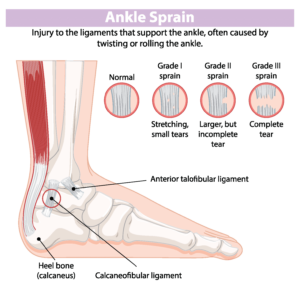
If you’ve just suffered a second-degree (grade 2) ankle sprain, you’re likely dealing with swelling, bruising, and significant pain with every step. A sprain of this severity involves a partial tear in at least one of the ligaments that stabilize your ankle, making it difficult to walk or bear weight (MGB). Your medical team may have recommended a walking boot to immobilize your ankle, providing some relief from weight bearing pain. However, recent research suggests that even severe ankle sprains recover better and faster when exposed to protected movement. Regardless of your treatment plan, your main question remains: When can I start practicing and playing again?

Grades of ankle sprains

The Road to Recovery

After a week of therapy, your swelling and pain may have decreased enough to transition out of the boot. At this stage, introducing protected movement is key to optimizing your recovery. Movement improves circulation, delivering essential oxygen and nutrients to the injured joint, while also strengthening the muscles and tendons. This, in turn, helps you regain lost agility and gets you back to your sport faster (SIP).

Protected movement is made possible by wearing an ankle brace that allows your ankle and foot to move freely in all the natural ways-but restricts excessive movement to the already injured ligaments, muscles, and joint surfaces (SIP). Because your ankle is now unstable, you’ll need to stabilize it with a brace when you return to practice, allowing your ligaments to fully heal and protect against reinjury.

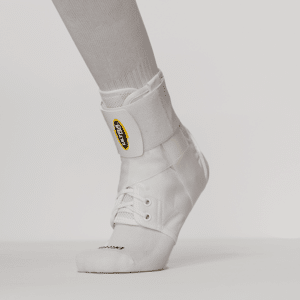
There are two types of ankle braces that can provide this stabilization: lace-up ankle braces and hinged (or semi-rigid) ankle braces. Lace-up braces, such as Ultra Ankle’s Ultra 360, offer support through a combination of laces and figure-8 straps, providing some flexibility while bracing the ankle. However, lace-up braces can lose their effectiveness as the fabric stretches and loosens over time, putting you at risk of re-injuring your ankle.

Ultra 360 black ankle brace for ankle injury recovery and prevention. volleyball ankle brace

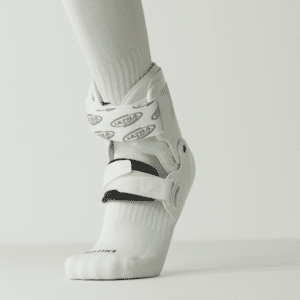
On the other hand, hinged ankle braces like the Ultra Zoom® help prevent your ankle from rolling side to side while still allowing the up-and-down movement needed to promote healing. This not only keeps you protected but also facilitates a quicker recovery (MVH). The Ultra Zoom’s patented hinge-cuff design offers an additional benefit: it helps prevent high ankle sprains, which are typically more painful and have a longer recovery period.

Ultra Zoom white ankle brace for ankle injury recovery and prevention

Recover Faster with the Ultra Zoom® Ankle Brace

The key to a quick and effective recovery is restoring your ankle’s range of motion and strength. The Ultra Zoom’s hinged-cuff design allows your ankle to move naturally, aiding rehabilitation while your ligaments heal. By maintaining normal ankle movement, the Ultra Zoom accelerates healing and rebuilds muscle strength, putting you on the fastest path to recovery. For more information you can watch our Ultra Zoom Product Features video.

Play Sooner – With Confidence

When you’re ready to return to practice or games, protecting your ankle from reinjury is critical. Your ankle is now more susceptible to twists and turns, increasing the risk of another sprain. The Ultra Zoom’s hinged-cuff design limits excessive inversion and rotation—movements that lead to ankle injuries. Its Performathane® soft, flexible shell forms a custom fit to your ankle using body heat, providing a secure, comfortable fit for all-day protection during every practice and game.

Ankle injuries are common in sports, but recurring injuries don’t have to be. By taking the right precautions with the Ultra Zoom Ankle Brace, you can stop the cycle of ankle injuries, and protect your pre-existing injury and play with confidence all season long.

Why Ankle Braces Do Not Weaken the Ankle Joint: Debunking the Myth with Ultra Ankle

Introduction – In the early 1990s, ankle braces began appearing more often in sports due to their improved designs and cost efficiency. As time has gone on, ankle braces have been a topic of debate among athletes, coaches, and medical professionals. In this debate, one common myth persists and that myth is wearing ankle braces can weaken the ankle joint, leading to dependency and muscle atrophy. This blog post aims to debunk this myth and highlight the benefits of using ankle braces, specifically those from Ultra Ankle®.

Common Belief About Ankle Braces Weakening the Ankle Joint – Many people believe that using ankle braces can lead to weakened muscles and dependency on the product. The concern is that ankle braces restrict movement, causing the muscles to become less active and eventually atrophy. However, this belief is not supported by scientific evidence. Jan Golden, DPM, wrote in a PPMA blog post “I tell parents that research has shown that there is no evidence that taping or bracing the previously injured ankle joint will make it wear or cause any other injuries above the ankle joint.” Additionally, Dr. Phil Page, Ph.D, PT, ATC, CSCS, FACSM wrote in Training & Conditioning “There is a misconception that if you wear a brace you don’t need to use the ankle as much, so people come to the conclusion without evidence that they will lose the strength; however, no studies have proven this.”

the-ankle-joint-anatomy

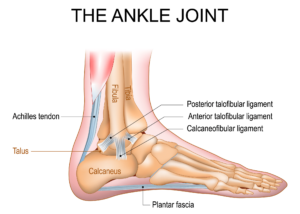
How Traditional Ankle Braces Function – Bones, muscles and a network of ligaments and tendons form internal supports that keep your ankle stable, flexible and strong. These internal supports maintain your ankle’s stability. However, once you’ve incurred an ankle injury the ligaments and tendons are stretched and loosened. Once stretched your ligaments and tendons do not return to their natural state. Traditional or “lace-up” ankle braces, like our Ultra 360®, are designed to do two things. The first is to provide external support and limit certain motions, such as plantar flexion/inversion, which is the movement at the ankle joint that points the foot downward away from the leg and turns the foot inward (MCHS). This helps to provide additional support to your ankle and to aid in preventing ankle injuries. The second is to provide external support after an ankle injury to aid in quicker recovery and to help prevent further ankle injuries. The only problem with traditional lace-up ankle braces is that because they restrict some movements of the ankle joint they can lead to diminished performance with regard to agility and vertical (HKJ). Lastly, once you’ve had an ankle injury lace-up ankle braces do not significantly protect against additional injury. In a study obtained from PubMed, if a (volleyball) player had a history of a previous ankle sprain, the brace did not protect the ankle from another injury. Hinged ankle braces, like our Ultra Zoom®, have the same primary functions as the lace-up ankle brace, to help prevent ankle injuries and to help in recovery from ankle injuries. However, hinged ankle braces allow your ankle to maintain it’s natural plantar flexion and dorsiflexion while restricting the excessive inversion/eversion or “rolling” of the ankle. Additionally, the Ultra Zoom has a hinged-cuff design which also helps to prevent high ankle sprains. Hinged or “semi-rigid” ankle braces have proven to restrict excessive ankle inversion and reduced injury incidences in those with previous ankle injuries (NIH). 

Benefits of Ultra Ankle Braces – Ultra Ankle offers a range of high-quality ankle braces that provide excellent support and protection without weakening the ankle joint. Which ankle brace is best for you depends on a few different factors. What is your ankle injury history? Are you looking for a brace to help prevent that initial ankle injury? Or, are you looking for a brace to help recover from recurrent ankle injuries during sports or activities? Ultra Ankle offers 4 advanced ankle braces designed to help prevent, treat, and recover from ankle injuries:

  • Ultra 360®: The Ultra 360 locks your ankle in place while the figure-8 straps provide 360º of ankle support to help prevent excessive ankle rolling. The multi-adjustable design allows you to customize your level of support. Click HERE to learn more about the Ultra 360 product features.

Ultra Ankle; Ultra 360; lace up; figure 8; ankle brace; ankle stabilizer; ankle injury prevention and recovery; ankle stabilizer; hiking ankle brace; volleyball ankle brace; football ankle brace; basketball ankle brace

  • Ultra Zoom®:The only ankle brace built for performance— you’ll play better and play more, losing less time to injuries with the Ultra Zoom. The Performathane® soft shell forms to you, allowing your ankle to move in all the natural ways while helping to prevent any excessive movement that may cause an injury. The Ultra Zoom is on your ankle in seconds, protects continuously for hours and lasts for multiple seasons. Click HERE to learn more about the Ultra Zoom product features.

Ultra Ankle, Ultra Zoom, ankle brace, ankle stabilizer, ankle injury prevention and recovery, volleyball ankle brace, football ankle brace, basketball ankle brace, soccer ankle brace, pickleball ankle brace, tennis ankle brace, performance, mobility

  • Ultra High-5®: The Ultra High-5 is a high-support brace designed for chronic ankle instability. Reinforce unstable ankles with the Ultra High-5. Feather-light but super-strong this ankle brace handles the twists and turns even the toughest terrain throws at you. Click HERE to learn more about the Ultra High-5 product features.

Ankle Brace, ankle stabilizer, chronic ankle injuries, hiking ankle brace, volleyball ankle brace, football ankle brace, basketball ankle brace

  • Ultra CTS®: The Ultra CTS is a FDA registered product designed to treat high ankle injuries, acute ankle injuries, and ankle osteoarthritis. The Ultra CTS is total ankle injury management. It not only helps to relieve weight-bearing pain but also provides maximum lower leg and ankle stability with its patented Performathane upright. Click HERE to learn more about the Ultra CTS product features.

The Premier Solution for Ankle Support, Recovery, and Osteoarthritis. Specifically designed to help treat and recover from high-ankle sprains and acute ankle injuries, as well as unload/offload the ankle to reduce bone-on-bone pain due to ankle OA

Safe Usage of Ankle Braces – To maximize the benefits of ankle braces, it’s crucial to use them correctly:

  • Proper Fit: Ensure the brace fits well to avoid pressure points and restricted blood flow. The Ultra Zoom, Ultra High-5, and Ultra CTS ankle braces can be easily tailored to fit your feet and ankles by using a home hair dryer. Watch our Ultra Ankle Custom Heating Video to learn how this process works. Keep in mind, like a new pair of shoes, all ankle braces require a break-in period.
  • Proper Shoes: Not all shoes are compatible with every ankle brace. To see which types of shoes to wear with Ultra Ankle braces, watch our Ultra Ankle Recommended Shoe Video.
  • Strengthening Exercises: Combine ankle strengthening exercises with the use of an ankle brace to maintain overall joint health.

Conclusion – The myth that ankle braces weaken the ankle joint is not supported by scientific evidence. Ankle braces, such as the Ultra 360, Ultra Zoom, Ultra High-5, and Ultra CTS from Ultra Ankle, provide essential support and injury prevention without compromising muscle strength. The Ultra Zoom, Ultra High-5 and Ultra CTS have also proven to help athletes and individuals recover from ankle injuries faster, allowing them to get back to their sport and/or daily lives more rapidly. By using these braces correctly, athletes and individuals can enjoy enhanced stability and protection, leading to safer participation in sports and daily activities.

The Best Shoes to Wear with Ankle Braces

When you’re wearing an ankle brace like the Ultra Zoom, choosing the right shoe isn’t just about comfort — it’s about performance, protection, and making sure your brace works exactly as intended.

The Ultra Zoom ankle brace features a hinged design that allows for protected movement, helping athletes stay confident on the court without limiting their mobility. But to get the most out of your brace, you need to pair it with the right kind of shoe.

In this guide, we’ll cover:

  • What type of shoes work best with ankle braces
  • The truth about high-top shoes and ankle support
  • Key features to look for when shopping
  • A simple method to ensure a perfect brace fit — the Shoelace Reset Method
  • An alternative brace option if you’re set on wearing high-tops

Section 2: Does It Matter What Type or Brand of Shoe You Wear with an Ankle Brace?

When it comes to wearing an ankle brace like the Ultra Zoom, one of the most common questions we hear is: “What kind of shoe should I wear with it?”

The good news is that the brand of athletic shoe doesn’t matter nearly as much as the design and structure of the shoe.

Avoid Shoes with a Sleeve or Collar Design

Shoes that have an integrated sleeve or sock-like collar — often seen in some basketball and volleyball shoes — can make it difficult to fit a brace inside. These designs reduce adjustability and may create tight spots or discomfort when used with a brace.

Instead, look for shoes with a traditional tongue-and-lace construction. This allows for more adjustability, easier entry, and a better overall fit with your ankle brace.

Why Court Shoes Work Best

Court shoes (like those used in volleyball, basketball, or tennis) are generally the most brace-compatible option. They’re designed for side-to-side movements, offer stable soles, and often have enough internal space to fit an ankle brace like the Ultra Zoom — without needing to size up.

So while you don’t need a specific brand, you’ll want to choose a shoe that:

  • Has a lace-up, low-cut design
  • Offers structure and stability
  • Allows room for the Ultra Zoom’s hinge to move freely

Looking for a lace-up ankle brace rather than a hinged ankle brace? You can check out our Ultra 360 Lace-Up ankle brace, which is compatible with a wider range of shoe types.

Section 3: High-Top Shoes — What to Know

Many athletes assume that wearing high-top shoes provides added ankle support. It’s a common belief — but not backed by the evidence.

High-top shoes alone do not offer meaningful ankle protection. While they may feel more secure around the ankle, that snugness doesn’t translate to true support or injury prevention.

Why High-Tops Don’t Pair Well with Hinged Braces

High-top designs can interfere with how a hinged brace like the Ultra Zoom functions. The Ultra Zoom is designed to move with your ankle, allowing protected movement — but a tight collar around the ankle can:

  • Restrict the hinge’s range of motion
  • Cause pressure points or discomfort
  • Make it difficult to properly position the brace inside the shoe

That’s why we typically recommend low-cut, lace-up athletic shoes for the best fit and performance.

If You Must Wear High-Tops…

We understand that some athletes are more comfortable in high-tops or are required to wear them as part of a team or personal preference. In those cases, we recommend the Ultra 360 Lace-Up ankle brace.

The Ultra 360 is a flexible, lace-up style brace that offers compression and mild to moderate support, and fits more easily inside high-top shoes where a hinged brace might not.

Section 4: What to Look for in a Shoe That Works with the Ultra Zoom

Not all athletic shoes are created equal — especially when you’re trying to fit a performance ankle brace like the Ultra Zoom. To make sure your brace functions properly and feels comfortable during play (and/or recovery), it’s important to choose a shoe with the right design elements.

Important: The Ultra Zoom is not designed to be worn or evaluated without shoes. The brace must be worn inside a proper athletic shoe — and the right type of shoe — to deliver the fit, comfort, and performance it was engineered for. Trying it on without a shoe can make it feel loose or bulky, but once properly fitted inside a lace-up athletic shoe, it conforms closely to the ankle and foot.

Lace-Up, Low-Cut Design

A traditional lace-up shoe allows you to loosen or tighten the fit where needed, which is essential when accommodating a brace. A low-cut collar gives the hinge of the ankle brace room to move and prevents unwanted pressure around the ankle joint.

Roomy Yet Structured Fit

Choose shoes that offer:

  • A roomy toe box
  • Structured sidewalls for lateral support
  • A sturdy heel counter to keep the foot locked in

These features help the Ultra Zoom sit properly inside the shoe without requiring you to size up. In fact, when fitted correctly (using the shoelace reset method we’ll explain next), athletes can wear the same shoe size they wore before adding the brace.

Stable Base for Court Sports

Since the Ultra Zoom is designed for high-impact, lateral-movement sports like volleyball, basketball, and tennis, pairing it with a court-style shoe makes the most sense. These shoes are built for quick stops, pivots, and jumps — exactly the type of movements where ankle protection matters most.

Learn more about the Ultra Zoom and its product features.

Section 5: How to Fit the Ultra Zoom Using the Shoelace Reset Method

When you first put on the Ultra Zoom ankle brace, you might notice that it changes the shape and volume of your foot and ankle slightly — which is completely normal.

To ensure your shoe adjusts properly to this new shape, we recommend using what we call the Shoelace Reset Method. It’s a one-time process that makes a big difference in fit, comfort, and performance.

Here’s how it works:

Step-by-Step: Shoelace Reset Method

  1. Completely loosen the laces on your shoe — all the way down to the toe box. Don’t just loosen the top few eyelets; you want full flexibility across the entire shoe.
  2. With the Ultra Zoom already on your ankle, place your foot into the shoe.
  3. Begin re-tightening the laces from the toe up, allowing the shoe to mold to the new shape of your foot with the brace on.
  4. Adjust the tension to what feels snug but comfortable — not overly tight.

That’s it. You’ll only need to do this once for each new pair of shoes.

Why It Matters

This process gives your shoe a customized fit around the brace, ensuring:

  • Maximum comfort
  • Stable support
  • Optimal performance of the Ultra Zoom’s Protected Movement

Skipping this step can result in difficulty fitting your foot and ankle brace into the shoe. It can also lead to uneven pressure, poor fit, or a feeling that the brace is “too bulky” — when in reality, it just needs the shoe to be properly reset.

Taking a few extra seconds to do this makes a significant difference in how the brace feels and performs from day one.

Section 6: Conclusion & Final Tips

Wearing the right shoe with your ankle brace can be the difference between discomfort and game-ready confidence. With a performance brace like the Ultra Zoom, matching it with the right type of shoe ensures it functions the way it was designed — providing protected movement, comfort, and support through every play.

Key Takeaways:

  • Brand doesn’t matter — design does. Look for low-cut, lace-up athletic shoes without a sleeve or collar design.
  • Avoid high-tops with the Ultra Zoom, as they can restrict hinge movement and cause pressure points.
  • If you prefer high-tops, consider the Ultra 360 Lace-Up, which fits more easily inside snug collars.
  • Always use the Shoelace Reset Method when first fitting the Ultra Zoom into your shoe for best results.
  • Never judge the brace’s fit or bulk without wearing it inside a shoe — it’s built to be worn with footwear and may feel loose when tried on without one.

By following these guidelines, you’ll get the most out of your Ultra Zoom — helping you stay on the court, play at your best, and protect your ankles without sacrificing comfort or mobility.

Explore the Ultra Zoom
Explore the Ultra 360 Lace-Up

Need more help with fitting?
Watch our quick video to see the Ultra Zoom in action:
Ultra Zoom Fitting Video

Do Ankle Braces Work?

It’s an age-old question and there are a myriad of opinions out there. What we do know is our ankles bear a lot of weight and are often subject to sharp and awkward movements. It is no surprise that injuries are common, so, when it comes to ankle injury prevention, support, pain management, and healing, do ankle braces actually help?

In short, yes. The long answer, however, is a little more complicated.

The Functionality of Ankle Braces:

Ankle braces have gained popularity as an aid in injury management and prevention. They are designed to provide stability, limit excessive movement, and offer support to the ankle joint. By minimizing the risk of unnatural twists and turns, ankle braces can significantly reduce the likelihood of sprains and strains during physical activities. However, not all ankle braces are alike. When considering buying an ankle brace, take the following into consideration:

  1. The brace must be made of quality materials and meet medical standards.
  2. Your ankle brace needs to fit you perfectly. That means any fabric should not be loose or too tight. Any splints should be anatomically contoured and all padding needs to be well placed.
  3. The brace must suit your specific condition. Are you wearing it for ankle injury prevention or recovery? Do you already have unstable ankles? Have you incurred a high ankle sprain or an acute ankle sprain?

For example, a neoprene “brace” won’t be the best choice for helping prevent an ankle injury and a neoprene “brace” certainly won’t help you recover from an ankle injury. That’s because there are no medical compression standards for neoprene. Additionally, cheap cost means mass production, which makes it very difficult to find a perfectly sized brace for your ankle. Remember, your brace must properly support and compress your ankle in key areas, because if it doesn’t, you risk ineffective injury prevention. If recovering from an injury you’ll likely have little to no relief from pain and swelling, at best, and re-injury at worst.

Also not recommended for ankle injury prevention or recovery are compression sleeves. The primary function of compression sleeves is to support your muscles by providing slight pressure and compression to promote optimal blood flow to the area the sleeve surrounds. Studies have shown that wearing compression sleeves dilates your arteries, resulting in increased blood flow, or vasodilation. Vasodilation is the widening of the blood vessels as a response to low oxygen in the blood, which happens during exercise and triggers an increased blood flow. Increasing blood flow improves the levels of oxygen and nutrients delivered to the body, which enables you to power through your workouts. What this means is compression ankle sleeves do nothing to actually support your ankle joint.

Lastly, in a study done by the International Journal of Sports Physical Therapy, it was determined that with the right ankle brace or stabilizer, athletes wearing ankle braces had a 64% reduced risk of ankle sprains compared to those with no ankle brace.

So, what braces do you want to buy that will provide you with the support, comfort and recovery benefits you may need?

Introducing Ultra Ankle® Products:

Among the leading brands in the ankle support industry, Ultra Ankle stands out for its advanced and scientifically engineered solutions. Ultra Ankle products combine cutting-edge technology with ergonomic design to offer unparalleled protection and comfort.

  1. Ultra 360® Lace-Up Ankle Brace:

The Ultra 360 Lace-Up is a game-changer in the world of ankle support. Its innovative design incorporates adjustable figure-8 straps provide 360º of ankle support to help prevent excessive ankle rolling. The multi-adjustable design allows you to customize your level of support. The Ultra 360 is recommended for individuals who require mild ankle support and have a minimal history of ankle injuries.

  1. Ultra Zoom® Ankle Brace:

Specifically tailored for athletes, the Ultra Zoom Ankle Brace offers a perfect blend of flexibility and support. Its sleek, low-profile design fits comfortably in sports shoes (traditional tongue and laces), making it an ideal choice for basketball, volleyball, football, soccer, and other high-impact sports. The Ultra Zoom’s Performathane® soft shell conforms to the ankle’s natural shape, through body heat, ensuring maximum comfort while providing maximum support. The patented Hinged-Cuff design allows the ankle to move in all its natural motions, and none of the bad ones, while still keeping all the tendons and muscles fully engaged as the brace does not bind the ankle and foot in the Neutral Position. The hinged-cuff design also helps to prevent high ankle sprains, which are much more painful and take much longer to recover from.

  1. Ultra High-5® Ankle Brace:

Have a history of ankle injuries? Are your ankles chronically unstable? Then the Ultra High-5 may be the ankle brace for you. With its feather-light but incredibly strong materials, the Ultra High-5 reinforces unstable ankles and can handle even the toughest twists and turns. The Ultra High-5 is also a great ankle brace for athletes and individuals who have recurring joint pain due to excessive pounding unforgiving surfaces.

  1. Ultra CTS® Ankle Brace:

When it comes to high ankle sprains, acute ankle injuries, or even Ankle Osteoarthritis, the Ultra CTS Ankle Brace shines. Engineered with the patented PerformaFit® upright technology, this brace mimics the anatomical contours of the ankle, delivering personalized support and stabilization.

  • High-Ankle Injuries: A high ankle injury occurs when the ankle is excessively externally rotated. The Ultra CTS has a hinged-cuff design which restricts excessive ankle inversion and ROTATION to treat both LOW and HIGH ankle injuries allowing the injured soft tissue to quickly heal.
  • Acute Ankle Injury: With an acute ankle injury you will most likely have weight bearing pain. The Ultra CTS will “unload” the ankle. Ankle unloading means the brace will absorb some of the impact from standing or walking that would normally be transferred into the ankle causing pain. Maximum lower leg and ankle support and stabilization will take stress off the injured ligaments allowing them to heal much quicker.
  • Osteoarthritis: With bone-on-bone joint irritation, or osteoarthritis (OA) you will need an ankle brace that will “unload” the ankle. Ankle unloading means the brace will absorb some of the impact from standing or walking that would normally be transferred into the ankle causing joint irritation and pain. For more details on how the Ultra CTS works for Osteoarthritis please visit our Osteoarthritis Page


The Verdict:

Do ankle braces actually help? The answer is a resounding yes, especially when armed with the right information and equipped with superior products like those offered by Ultra Ankle. Ankle braces serve as vital tools in both preventing and managing ankle injuries. With Ultra Ankle’s range of advanced solutions, individuals can confidently pursue their active lifestyles with reduced worry about potential ankle-related setbacks.


Conclusion:

In the realm of ankle support, Ultra Ankle products have truly elevated the game. Their commitment to blending science, comfort, and innovation has resulted in a lineup of braces that not only provide exceptional support but also contribute to the overall well-being of athletes and individuals. So, if you’re considering investing in ankle braces to safeguard your ankles, don’t overlook the transformative offerings brought forth by Ultra Ankle. Your ankles will thank you for the reliable protection and support these products provide.

Why Parents Trust Ultra Ankle Ultra® Zoom Braces for Their Kids: Ensuring Safety with Advanced Ankle Support

As parents, we prioritize our children’s safety and well-being, especially when they are involved in sports and physical activities that may put them at risk for injuries. In these situations, protective gear is a must, and among the many options available, ankle braces are essential. One standout brand parents trust is Ultra Ankle, specifically the Ultra Zoom®, and for good reasons.

  1. Superior Support and Protection:

Ultra Zoom® braces offer robust and high-quality design that provides exceptional ankle support while still allowing for maximum mobility. Designed to stabilize and help prevent the ankle from injuries such as sprains, twists, and rolls, they are a top choice for parents whose kids play high-intensity sports like football, volleyball, or soccer.

  1. Innovative Design:

Ultra Zoom® braces feature advanced technology and an innovative design. The hinged-cuff design limits excessive movement that could lead to high ankle injuries while maintaining enough flexibility for peak performance. This means your young athlete will stay in the game and not on the sideline with an ankle injury. This balance between safety and performance is why many parents opt for Ultra Ankle.

  1. Comfort and Fit:

Ultra Ankle braces are celebrated for their snug fit and comfort, ensuring that kids can wear them for extended periods without feeling restricted or uncomfortable. Ultra Ankle braces, specifically the Ultra Zoom, custom form-fit to the athlete’s foot and ankle through body heat. This is perfect for growing children who need consistent and reliable support over several seasons of play.

  1. Durability:

Durability is a major selling point for Ultra Ankle braces. Made from high-quality materials, these braces can withstand rigorous physical activity, giving parents value for their money and the assurance that their child’s safety gear is up to the task. The Ultra Zoom brace can last up to 3 full seasons depending on use and demands put on the brace.

  1. Ease of Use:

Designed with usability in mind, Ultra Ankle Ultra Zoom braces are easy to put on, adjust, and take off, which is an essential feature for kids who might need to use them independently. This ease of use enhances their appeal among both kids and their parents. This differs from taping or lace-up braces which are both time consuming to put on and take off.

  1. Positive Reviews and Experiences:

Ultra Ankle braces have been positively received by professionals in the sports and health industries and parents alike. A user review from a parent named Sarah states, “My daughter has been using Ultra Ankle braces for her volleyball games, and they have been a game-changer. I no longer worry about her getting injured on the court. Plus, she loves how comfortable they are.” Another parent, John, shared, “I got Ultra Ankle braces for my son who plays soccer. They’ve stood up to some tough games, and he’s been injury-free. Highly recommended for any young athlete.”

These endorsements and positive experiences have helped build trust and a strong reputation for Ultra Ankle braces, making them a preferred choice among parents.

To summarize, parents prefer Ultra Ankle braces for their children because of their advanced design, superior support, durability, and positive reviews. Not only do these braces protect young athletes’ ankles, but they also provide parents with the assurance they need when their children are out on the field or court.

Unlike most other sports, where a player’s hands are important, choosing the right ankle brace for soccer is much more critical due to soccer players primarily utilizing their ankles and feet during play.

Imagine asking a basketball player to wear a rigid brace on his hand… that player would probably find it difficult to dribble and shoot because the brace takes away his touch on the ball and/or restricts his natural range of motion. The same goes for soccer players who rely on their ankle and foot to control the soccer ball, which is what makes choosing a soccer ankle brace difficult and frustrating.

When it comes to ankle guards, you don’t want too much restriction that would negatively impact your performance but if your ankle is unstable and isn’t braced properly you are highly susceptible to repeat ankle injuries. Fortunately, there are new types of ankle braces available that focus on support and performance – meaning soccer players are able to retain their full range of motion and ball touch while helping to prevent ankle sprains.

When sitting on the sidelines after numerous soccer ankle injuries isn’t an option anymore, it’s time to evaluate the different types of soccer ankle braces available.

Types of Soccer Ankle Braces

There are three main types of ankle braces available on the market today:

  1. Lace-up ankle supports – Fabric based lace-up design with wrap around straps.
  2. Rigid/Hard Plastic Braces – Semi-rigid hinge design with attachment straps.
  3. Soft Shell Ankle Braces – Flexible hinged-cuff design with attachment straps.

Lace-Up Ankle Braces

Lace-up ankle braces were first introduced in 1887 as a basic corset design that restricts all ankle range of motion. Lace-up braces of today will typically have straps that wrap around the ankle in a figure-8.

Since these braces can be laced up as tight as possible, they may give the wearer a false sense of support when they are first applied, however they lose support quickly as they resist the ankle’s natural range of motion. While lace-up ankle guards may feel comfortable because they are made from fabric, this fabric is also less durable and will easily rip and tear over time… not to mention absorb odors and start to smell pretty bad.

Research studies have shown that lace-up ankle braces can restrict performance by resisting the natural up and down range of motion of the ankle. This is one reason why we recommend athletes wear a hinged ankle brace for prevention purposes – this way the ankle does not weaken over time due to being held tightly in place. While all hinged ankle braces are not the same, they do provide the necessary range of motion to enhance ankle strength and performance unlike the lace-up type braces.

Overall, the lace-up ankle brace is designed for individuals on a budget needing mild ankle support that are not engaging in competitive and/or high intensity activity. Some of the better brands in this category are McDavid®, ShockDoctor®, Cramer® and ASO®.

Rigid Ankle Braces

Rigid, or semi-rigid ankle braces are made of hard plastic and typically have a hinge that allows full up and down ankle range of motion.  The rigid hinged ankle brace was first introduced commercially in 1985. A pivoting hinge connecting the bottom foot section on both sides of the ankle to an upright section that was secured with a strap to the lower leg.  The innovative hinge design offered the athlete free up and down ankle motion to run and jump without restriction. With the brace moving with the ankle, and not against it like with lace-ups, the brace stayed securely in place maintaining longer-lasting ankle support.

Historically soccer players have stayed away from these rigid ankle braces for three reasons:

  1.  Since the brace is rigid or semi-rigid it can be bulky to wear and trying to fit the brace in a tight-fitting soccer cleat can be difficult.
  2. The more rigid the ankle brace is the more uncomfortable it can be to wear for extended periods of time.
  3. Soccer players say that rigid braces effect their touch on the ball as the ball can be deflected off the brace creating an uncontrolled dribble.

Hinged ankle braces are good for individuals looking for moderate ankle support to help protect or prevent the basic “low” ankle sprain or inversion (turning) ankle injury. Brands in this category are Active Ankle® and McDavid®.

Soft Shell Ankle Braces

The newest and most advanced type of ankle brace to hit the market utilizes a “soft shell” design (trademarked Performathane®) to work with a player’s body heat to create a flexible, custom fit. These custom fitting ankle braces are supportive enough to help prevent ankle injuries but are also flexible and low-profile enough to be worn in the standard tight-fitting soccer cleat for extended periods of time. Introduced in 2000, the purpose of the soft shell design is to provide support as close to the skin as possible. By creating a form-fitting ankle brace around the ankle joint you are able to control excessive joint motion much better than older types of braces.

Our soft shell ankle brace, the Ultra Zoom, also incorporates the next-generation hinged-cuff design. While hinged braces restrict excessive ankle turning, the hinged-cuff design restricts excessive ankle turning and twisting to help prevent both low and high ankle injuries. For that reason, the hinged-cuff design ankle brace offers a higher level of protection than either the lace-up or hinged only ankle brace design.

The soft shell ankle brace is best for athletes who want to help prevent ankle injuries or players with mild/moderate ankle instability. Typically lasting multiple sports season, these are also the most cost effective ankle bracing solution in the market due to their durability.

Soccer Cleats and Ankle Braces

Low-profile, flexible ankle braces fit in almost every traditional soccer cleat, however in recent years newer cleat designs utilizing a sock-like liner may be too tight to insert an ankle brace in. These select newer cleats, where the upper shoe is one complete piece, are difficult not only to fit ankle braces but other medical devices such as custom orthopedic inserts as well. If you’re a soccer player that needs to wear a preventative ankle brace, we recommend a low top soccer cleat with a traditional tongue and laces if possible. This type of soccer cleat creates a larger opening to insert the ankle with the brace applied.

If you have any more questions about soccer ankle braces, feel free to send our athletic trainers a message online or by commenting on this post below!

Ultra Zoom

Help prevent ankle injuries all season long.

Ultra High-5

Reinforce the ankle after a history of multiple ankle injuries

Ultra CTS

Maximize stabilization to treat acute ankle injuries