Why Ankle Braces Do Not Weaken the Ankle Joint: Debunking the Myth with Ultra Ankle

Introduction – In the early 1990s, ankle braces began appearing more often in sports due to their improved designs and cost efficiency. As time has gone on, ankle braces have been a topic of debate among athletes, coaches, and medical professionals. In this debate, one common myth persists and that myth is wearing ankle braces can weaken the ankle joint, leading to dependency and muscle atrophy. This blog post aims to debunk this myth and highlight the benefits of using ankle braces, specifically those from Ultra Ankle®.

Common Belief About Ankle Braces Weakening the Ankle Joint – Many people believe that using ankle braces can lead to weakened muscles and dependency on the product. The concern is that ankle braces restrict movement, causing the muscles to become less active and eventually atrophy. However, this belief is not supported by scientific evidence. Jan Golden, DPM, wrote in a PPMA blog post “I tell parents that research has shown that there is no evidence that taping or bracing the previously injured ankle joint will make it wear or cause any other injuries above the ankle joint.” Additionally, Dr. Phil Page, Ph.D, PT, ATC, CSCS, FACSM wrote in Training & Conditioning “There is a misconception that if you wear a brace you don’t need to use the ankle as much, so people come to the conclusion without evidence that they will lose the strength; however, no studies have proven this.”

the-ankle-joint-anatomy

How Traditional Ankle Braces Function – Bones, muscles and a network of ligaments and tendons form internal supports that keep your ankle stable, flexible and strong. These internal supports maintain your ankle’s stability. However, once you’ve incurred an ankle injury the ligaments and tendons are stretched and loosened. Once stretched your ligaments and tendons do not return to their natural state. Traditional or “lace-up” ankle braces, like our Ultra 360®, are designed to do two things. The first is to provide external support and limit certain motions, such as plantar flexion/inversion, which is the movement at the ankle joint that points the foot downward away from the leg and turns the foot inward (MCHS). This helps to provide additional support to your ankle and to aid in preventing ankle injuries. The second is to provide external support after an ankle injury to aid in quicker recovery and to help prevent further ankle injuries. The only problem with traditional lace-up ankle braces is that because they restrict some movements of the ankle joint they can lead to diminished performance with regard to agility and vertical (HKJ). Lastly, once you’ve had an ankle injury lace-up ankle braces do not significantly protect against additional injury. In a study obtained from PubMed, if a (volleyball) player had a history of a previous ankle sprain, the brace did not protect the ankle from another injury. Hinged ankle braces, like our Ultra Zoom®, have the same primary functions as the lace-up ankle brace, to help prevent ankle injuries and to help in recovery from ankle injuries. However, hinged ankle braces allow your ankle to maintain it’s natural plantar flexion and dorsiflexion while restricting the excessive inversion/eversion or “rolling” of the ankle. Additionally, the Ultra Zoom has a hinged-cuff design which also helps to prevent high ankle sprains. Hinged or “semi-rigid” ankle braces have proven to restrict excessive ankle inversion and reduced injury incidences in those with previous ankle injuries (NIH). 

Benefits of Ultra Ankle Braces – Ultra Ankle offers a range of high-quality ankle braces that provide excellent support and protection without weakening the ankle joint. Which ankle brace is best for you depends on a few different factors. What is your ankle injury history? Are you looking for a brace to help prevent that initial ankle injury? Or, are you looking for a brace to help recover from recurrent ankle injuries during sports or activities? Ultra Ankle offers 4 advanced ankle braces designed to help prevent, treat, and recover from ankle injuries:

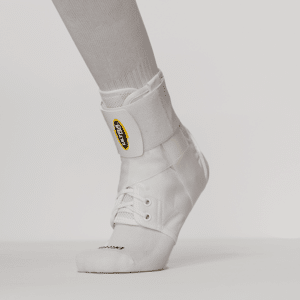
  • Ultra 360®: The Ultra 360 locks your ankle in place while the figure-8 straps provide 360º of ankle support to help prevent excessive ankle rolling. The multi-adjustable design allows you to customize your level of support. Click HERE to learn more about the Ultra 360 product features.
Ultra Ankle; Ultra 360; lace up; figure 8; ankle brace; ankle stabilizer; ankle injury prevention and recovery; ankle stabilizer; hiking ankle brace; volleyball ankle brace; football ankle brace; basketball ankle brace

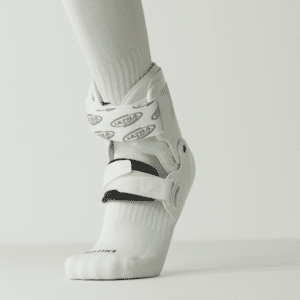
  • Ultra Zoom®:The only ankle brace built for performance— you’ll play better and play more, losing less time to injuries with the Ultra Zoom. The Performathane® soft shell forms to you, allowing your ankle to move in all the natural ways while helping to prevent any excessive movement that may cause an injury. The Ultra Zoom is on your ankle in seconds, protects continuously for hours and lasts for multiple seasons. Click HERE to learn more about the Ultra Zoom product features.
Ultra Ankle, Ultra Zoom, ankle brace, ankle stabilizer, ankle injury prevention and recovery, volleyball ankle brace, football ankle brace, basketball ankle brace, soccer ankle brace, pickleball ankle brace, tennis ankle brace, performance, mobility

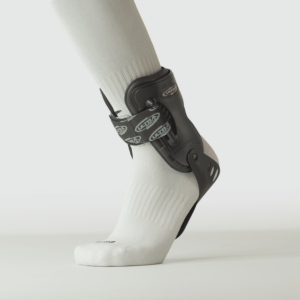
  • Ultra High-5®: The Ultra High-5 is a high-support brace designed for chronic ankle instability. Reinforce unstable ankles with the Ultra High-5. Feather-light but super-strong this ankle brace handles the twists and turns even the toughest terrain throws at you. Click HERE to learn more about the Ultra High-5 product features.
Ankle Brace, ankle stabilizer, chronic ankle injuries, hiking ankle brace, volleyball ankle brace, football ankle brace, basketball ankle brace

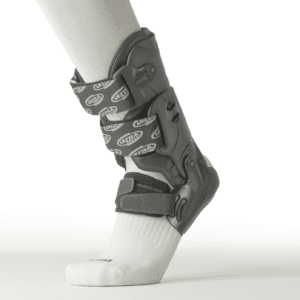
  • Ultra CTS®: The Ultra CTS is a FDA registered product designed to treat high ankle injuries, acute ankle injuries, and ankle osteoarthritis. The Ultra CTS is total ankle injury management. It not only helps to relieve weight-bearing pain but also provides maximum lower leg and ankle stability with its patented Performathane upright. Click HERE to learn more about the Ultra CTS product features.
The Premier Solution for Ankle Support, Recovery, and Osteoarthritis. Specifically designed to help treat and recover from high-ankle sprains and acute ankle injuries, as well as unload/offload the ankle to reduce bone-on-bone pain due to ankle OA

Safe Usage of Ankle Braces – To maximize the benefits of ankle braces, it’s crucial to use them correctly:

  • Proper Fit: Ensure the brace fits well to avoid pressure points and restricted blood flow. The Ultra Zoom, Ultra High-5, and Ultra CTS ankle braces can be easily tailored to fit your feet and ankles by using a home hair dryer. Watch our Ultra Ankle Custom Heating Video to learn how this process works. Keep in mind, like a new pair of shoes, all ankle braces require a break-in period.
  • Proper Shoes: Not all shoes are compatible with every ankle brace. To see which types of shoes to wear with Ultra Ankle braces, watch our Ultra Ankle Recommended Shoe Video.
  • Strengthening Exercises: Combine ankle strengthening exercises with the use of an ankle brace to maintain overall joint health.

Conclusion – The myth that ankle braces weaken the ankle joint is not supported by scientific evidence. Ankle braces, such as the Ultra 360, Ultra Zoom, Ultra High-5, and Ultra CTS from Ultra Ankle, provide essential support and injury prevention without compromising muscle strength. The Ultra Zoom, Ultra High-5 and Ultra CTS have also proven to help athletes and individuals recover from ankle injuries faster, allowing them to get back to their sport and/or daily lives more rapidly. By using these braces correctly, athletes and individuals can enjoy enhanced stability and protection, leading to safer participation in sports and daily activities.

The Best Shoes to Wear with Ankle Braces

Finding shoes that work with ankle braces can be tricky. Some shoes, like mid-top or high-tops, restrict brace movement or don’t provide enough room for a hinge-style ankle brace.

The most brace-compatible shoes typically:

• Use a traditional tongue-and-lace design
• Provide stable soles for side-to-side movement
• Allow room for a hinged brace to move freely
• Avoid sock-style or sleeve collars

Court shoes (basketball, volleyball, tennis) often work best because they are built for stability and lateral movement.

Many athletes pair these shoes with the Ultra Zoom Ankle Brace, designed to fit comfortably inside athletic footwear.

SHOP ULTRA ZOOM

Looking for a lace-up ankle brace rather than a hinged ankle brace? You can check out our Ultra 360 Lace-Up ankle brace, which is compatible with a wider range of shoe types.

High-Top Shoes — What to Know

Many athletes assume that wearing high-top shoes provides added ankle support. It’s a common belief — but not backed by the evidence.

High-top shoes alone do not offer meaningful ankle protection. While they may feel more secure around the ankle, that snugness doesn’t translate to true support or injury prevention.

Why High-Tops Don’t Pair Well with Hinged Braces

High-top designs can interfere with how a hinged brace like the Ultra Zoom functions. The Ultra Zoom is designed to move with your ankle, allowing protected movement — but a tight collar around the ankle can:

  • Restrict the hinge’s range of motion
  • Cause pressure points or discomfort
  • Make it difficult to properly position the brace inside the shoe

That’s why we typically recommend low-cut, lace-up athletic shoes for the best fit and performance.

If You Must Wear High-Tops…

We understand that some athletes are more comfortable in high-tops or are required to wear them as part of a team or personal preference. In those cases, we recommend the Ultra 360 Lace-Up ankle brace.

The Ultra 360 is a flexible, lace-up style brace that offers compression and mild to moderate support, and fits more easily inside high-top shoes where a hinged brace might not.

Best Basketball Shoes for Ankle Braces

Look for low-top court shoes with traditional tongue-and-laces and stable soles. Avoid mid-top and high-top shoes as well as shoes with a cuff or sleeve/sock style design.

Best Volleyball Shoes for Ankle Braces

Just like basketball shoes, look for low-top court shoes with traditional tongue-and-laces and stable soles. Avoid mid-top and high-top shoes as well as shoes with a cuff or sleeve/sock style design. If wearing a hinged ankle brace, be especially sure to avoid shoes that will put pressure on the hinge area of the ankle brace.

Best Tennis Shoes for Ankle Braces

Look for low-top court shoes with traditional tongue-and-laces and stable soles.

Best Soccer Cleats for Ankle Braces

Look for low-top cleats with traditional tongue-and-laces and stable soles. Soccer cleats (as well as in other sports) are often worn very tight, which can make it difficult to fit a hinged brace like the Ultra Zoom.

A simple solution is to remove the lower strap, slide the Ultra Zoom foot plate under the cleat’s insole, and leave the brace in the shoe. This allows the cleat to stay snug while still providing full ankle support.

Best Football Cleats for Ankle Braces

Look for low-top cleats with traditional tongue-and-laces and stable soles. Football cleats are often worn very tight, which can make it difficult to fit a hinged brace like the Ultra Zoom.

A simple solution is to remove the lower strap, slide the Ultra Zoom foot plate under the cleat’s insole, and leave the brace in the shoe. This allows the cleat to stay snug while still providing full ankle support.

How to Fit the Ultra Zoom Using the Shoelace Reset Method

When you first put on the Ultra Zoom ankle brace, you might notice that it changes the shape and volume of your foot and ankle slightly — which is completely normal.

To ensure your shoe adjusts properly to this new shape, we recommend using what we call the Shoelace Reset Method. It’s a one-time process that makes a big difference in fit, comfort, and performance.

Here’s how it works:

Step-by-Step: Shoelace Reset Method

  1. Completely loosen the laces on your shoe — all the way down to the toe box. Don’t just loosen the top few eyelets; you want full flexibility across the entire shoe.
  2. With the Ultra Zoom already on your ankle, place your foot into the shoe.
  3. Begin re-tightening the laces from the toe up, allowing the shoe to mold to the new shape of your foot with the brace on.
  4. Adjust the tension to what feels snug but comfortable — not overly tight.

That’s it. You’ll only need to do this once for each new pair of shoes.

Why It Matters

This process gives your shoe a customized fit around the brace, ensuring:

  • Maximum comfort
  • Stable support
  • Optimal performance of the Ultra Zoom’s Protected Movement

Skipping this step can result in difficulty fitting your foot and ankle brace into the shoe. It can also lead to uneven pressure, poor fit, or a feeling that the brace is “too bulky” — when in reality, it just needs the shoe to be properly reset.

Taking a few extra seconds to do this makes a significant difference in how the brace feels and performs from day one.

Conclusion & Final Tips

Wearing the right shoe with your ankle brace can be the difference between discomfort and game-ready confidence. With a performance brace like the Ultra Zoom, matching it with the right type of shoe ensures it functions the way it was designed — providing protected movement, comfort, and support through every play.

Key Takeaways:

  • Brand doesn’t matter — design does. Look for low-cut, lace-up athletic shoes without a sleeve or collar design.
  • Avoid high-tops with the Ultra Zoom, as they can restrict hinge movement and cause pressure points.
  • If you prefer high-tops, consider the Ultra 360 Lace-Up, which fits more easily inside snug collars.
  • Always use the Shoelace Reset Method when first fitting the Ultra Zoom into your shoe for best results.
  • Never judge the brace’s fit or bulk without wearing it inside a shoe — it’s built to be worn with footwear and may feel loose when tried on without one.

By following these guidelines, you’ll get the most out of your Ultra Zoom — helping you stay on the court, play at your best, and protect your ankles without sacrificing comfort or mobility.

Explore the Ultra Zoom
Explore the Ultra 360 Lace-Up

Need more help with fitting?
Watch our quick video to see the Ultra Zoom in action:
Ultra Zoom Fitting Video